The short answer
Scratch a thin twig: green under the bark means it's alive, dry and brown means that part is dead. A tree that's dead from the top down, has started to lean, has cracks in the trunk or main forks, fungi at the base or large hanging limbs should be looked at by someone qualified, sooner if it's over the house, driveway or a play area. Keep people clear in wind. Dead native trees are usually exempt from permits, but not a standing dead tree 40 cm or more across at 1.3 metres.
Is it dead, or just doing it tough?
Gums under stress after a long dry spell can drop a lot of leaves and look half dead, then reshoot along the trunk and branches when rain comes. Deciduous trees such as elms, oaks and ashes are bare every winter. Before deciding a tree is gone, check:
- The scratch test. Scrape a thin twig with a fingernail. Moist green tissue underneath is alive; dry brown wood isn't. Test twigs from several parts of the crown.
- The bend test. Living twigs bend; dead ones snap cleanly.
- Buds and new shoots. In spring, look for swelling buds or fresh shoots, including on the trunk.
- Bark. Gums shed bark naturally every year. Bark that's loose in large sheets on a tree that isn't a shedding species, or wood that's soft underneath, is more worrying.
A tree that's dead in one section isn't necessarily dead throughout. Removing dead limbs can make a big old gum safe to keep.
Need this done?
Signs a tree may be dangerous
Parks Victoria warns that "trees can drop limbs, or entire trees can fall, without warning and there is no way of determining when", and to take extra care in hot or windy weather. You can't predict a failure, but these signs are worth getting a tree looked at for:
- A new lean, or soil cracking and lifting on one side of the base
- Dead from the top down, or large dead branches in the crown
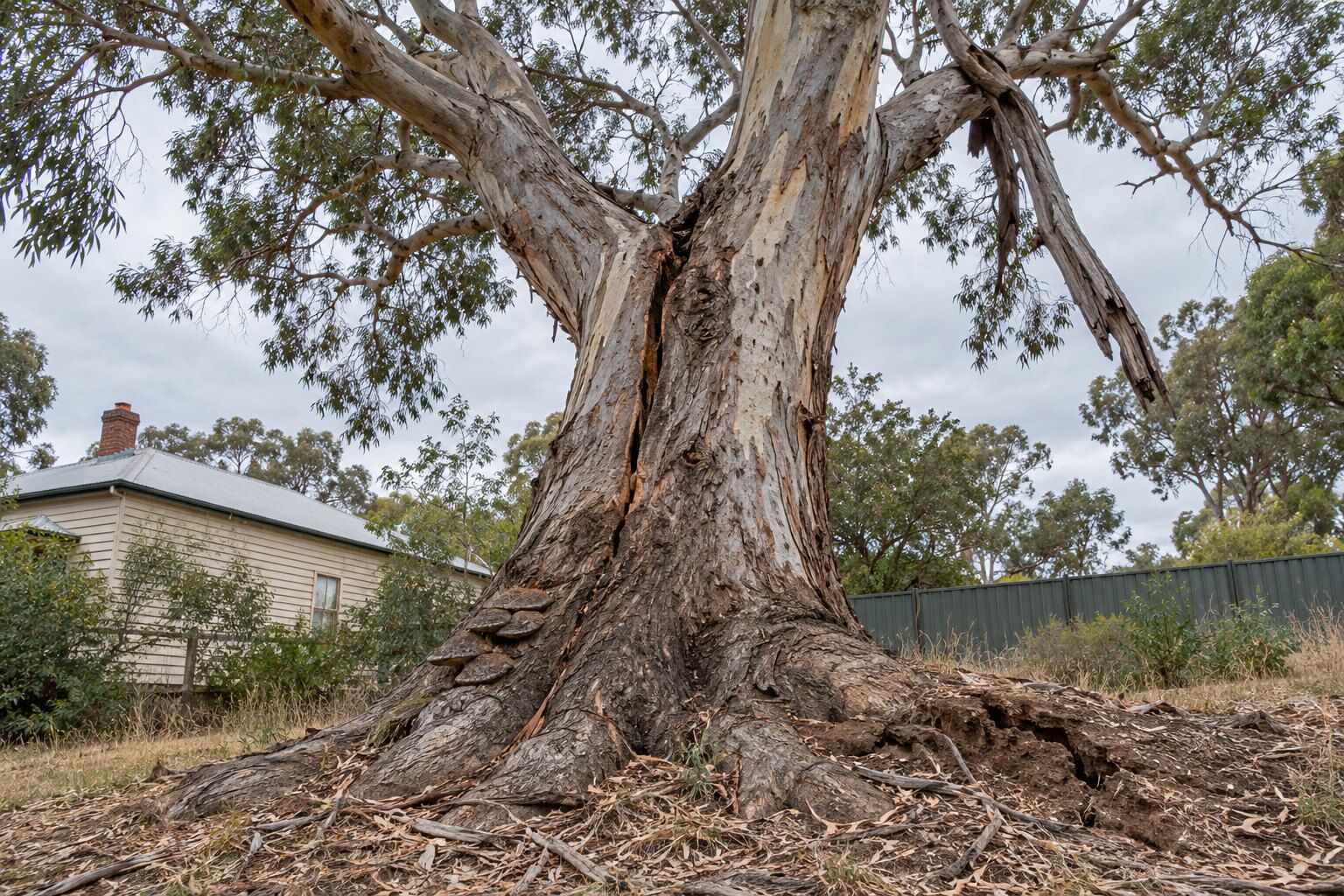
- Cracks or splits in the trunk, or where big limbs meet in a tight V
- Fungi on the trunk or roots, hollows, or soft, crumbly wood
- A limb broken and hanging in the canopy after wind
- Roots cut or damaged by trenching, a new driveway or building work
What's underneath matters as much as the tree. A dead wattle in the back paddock is a low risk; a dead gum over the bedroom, the driveway or the neighbour's yard is not.
What to do now
If a tree or limb is moving, cracking or has partly fallen, keep everyone away from the area it could reach, which is at least its full height and often more. Then:
- Call 000 if anyone is in danger
- Call VICSES on 132 500 for storm damage to your home
- Call Powercor on 13 24 12 if a tree is on or near powerlines, and stay well clear
- Take photos from a safe spot for your insurer
For a tree that worries you but isn't moving, there's time for an assessment and a quote. Our storm damage and dangerous trees page covers the steps after a storm, and the tree height and fall-zone calculator shows whether a tree could reach your house or fence.
Dead trees and permits
The state native vegetation rules (Clause 52.17) exempt dead native vegetation, except "a standing dead tree with a trunk diameter of 40 centimetres or more at a height of 1.3 metres above ground level". So a large dead gum still needs a permit unless another exemption applies. There's a separate exemption for vegetation presenting "an immediate risk of personal injury or damage to property", but it covers only the part that presents that risk.
Overlays on your land can add their own rules. The permit guide explains how to check, and council's planning team is on 1300 002 642.
Street trees and council trees
If the dead or damaged tree is on the nature strip or in a park, it's the City of Greater Bendigo's. Report it with council's online tree maintenance request form or on 1300 002 642. Don't prune or remove it yourself: council's nature strip guidelines say its planted street trees "are not to be pruned or lopped by property owners".
Getting it assessed
For most private trees, a tree contractor can look at it and quote to remove dead limbs or the whole tree. Where you need something in writing, such as for council, an insurer or a dispute with a neighbour, ask for an arborist's report; our guide to arborists and tree loppers explains the difference and what reports cost.
Questions about dead or dangerous trees
How can I tell if my gum tree is dead?
Scratch thin twigs from several parts of the crown. Green, moist tissue under the bark means that part is alive. Gums can drop most of their leaves in drought and reshoot after rain, so look for new shoots on the trunk and branches before deciding.
Do I need a permit to remove a dead tree in Bendigo?
Dead native vegetation is exempt from the state native vegetation rules, except a standing dead tree with a trunk 40 cm or more across at 1.3 m above the ground. Overlays can add their own rules, so check your VicPlan report and council.
Who do I call about a dangerous tree?
000 if anyone is in danger, VICSES on 132 500 for storm damage to your home, Powercor on 13 24 12 for trees on powerlines, and the City of Greater Bendigo on 1300 002 642 for street and park trees. For a tree on your own property that isn't moving, a tree contractor can assess and quote.
Is a leaning tree dangerous?
Trees that have always leaned are often stable. A new lean, or soil cracking and heaving on one side of the base, is a warning sign and worth getting looked at quickly.
Can a dead tree be left standing?
Away from people and buildings, often yes: dead trees are habitat. Close to the house, a driveway or a play area, the dead limbs will fall in time, so get it assessed.
Where this information comes from
The rules and figures on this page come from these published pages, checked on 27 September 2026.
- Parks Victoria: visitor safety tips in parks · State parks agency on falling limbs
- Greater Bendigo Planning Scheme, Clause 52.17 Native vegetation · State-wide native vegetation provision and its table of exemptions
- City of Greater Bendigo: removal of native vegetation · Council planning information sheet
- City of Greater Bendigo: urban tree management · Council requests for street tree maintenance and removal
- City of Greater Bendigo: Nature Strip Guidelines · Council rules for nature strips and street trees
- Energy Safe Victoria: trees and vegetation · State electrical safety regulator, service lines and fallen powerlines
- CitiPower and Powercor: vegetation management · The electricity distributor for Bendigo, on trees near powerlines
- Victorian Government: trees in Victoria · Dispute Settlement Centre of Victoria guidance on neighbours' trees, updated 26 February 2026