The short answer
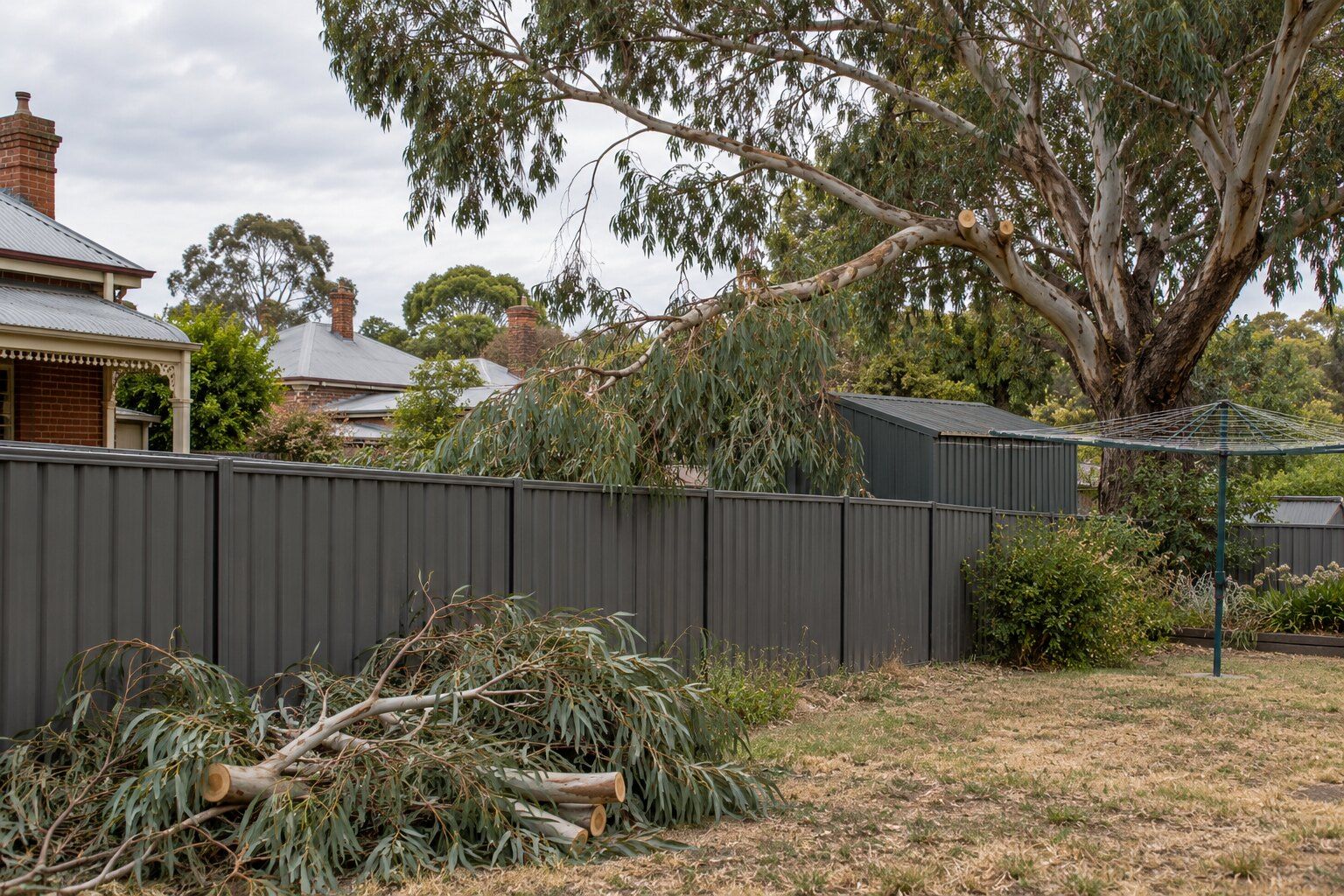
You can cut back branches, leaves and roots that cross onto your property, back to the boundary line, at your own cost. You need your neighbour's consent to go onto their land, you're liable for damage you cause to their tree, and the cuttings stay theirs unless you agree otherwise. Check with council first in case the tree is protected. Leaves and fruit falling on your side usually aren't a legal nuisance. If talking doesn't work, the Dispute Settlement Centre of Victoria offers free mediation.
What you're allowed to do
The Victorian Government's page on trees, from the Dispute Settlement Centre of Victoria, says:
- "You have the right to cut back any branches, leaves, or roots that cross your property boundary line at your own cost."
- "You need your neighbour's consent before entering their land to perform maintenance."
- You're "liable for any damage you cause to your neighbour's tree".
- "Unless you agree otherwise, you must return the branches & leaves to your neighbour as they remain their property."
In practice that means cutting at the boundary, from your side, without poisoning or damaging the rest of the tree. Ask whoever does the work to cut back to a branch collar or side branch near the line, not to leave stubs, and to tell you if a cut would unbalance the tree. Agree in advance with your neighbour where the cut branches go; most people are happy for them to be chipped.
Need this done?
Check for a permit first
Overhang doesn't override the planning rules. The government guidance says to check with council, because you "may need a permit to cut it back" if the tree is protected. For a native tree, maintenance pruning of no more than a third of the foliage is exempt from the state native vegetation rules, but overlays on the land, such as a Vegetation Protection or Heritage Overlay with tree controls, can require a permit. The permit guide shows how to check in VicPlan.
Powerlines are separate again. If the overhanging branches are near the lines, only Powercor-authorised workers can cut in the No Go Zone, so contact Powercor about them.
Who pays?
Usually you do. "Tree owners are not obliged to pay for tree maintenance," the guidance says, and trimming branches over your side is at your own cost. Leaves, bark, flowers, fruit and sap falling into your yard are part of a tree's normal life cycle and usually aren't a private nuisance on their own, so a court is unlikely to order a tree removed because of them.
It changes when the tree is causing damage. The guidance says that if your neighbour's tree has damaged your property, "it is possible that your neighbour is liable for the damage", and damage from roots is usually covered under property law. It suggests:
- Checking your home insurance first
- Gathering evidence: an arborist's report, photos and repair quotes
- Raising it with your neighbour and negotiating
For damage to a shared fence, the guidance points to the Fences Act for who pays. Roots under paths and pipes are covered in our tree roots guide.
Talk first
"The easiest and quickest way to solve a tree dispute is by having an informal chat with your neighbour about the problem," the guidance says, and if you don't know them well, a note in the letterbox can start it. Things that help:
- Be specific: which branches, what they're doing (on the roof, over the clothesline, rubbing the shed)
- Offer options: you cut your side, or you share the cost of pruning the whole tree properly, which usually looks better than a flat cut at the fence
- Agree where the cuttings go
- If you're in a bushfire prone area, mention it: the CFA's fence-line rules let neighbours clear along a boundary fence, but clearing on their side needs their written permission
If you can't agree
The Dispute Settlement Centre of Victoria "provides free dispute resolution services across Victoria", including neighbour disputes over trees and fences. Mediation, the guidance says, "gives you and your neighbour an opportunity to speak with each other". Call 1300 372 888.
If that fails, you can go to the Magistrates' Court, which decides whether the issue is a private nuisance and who pays what. A private nuisance is when "your use and enjoyment of your land is affected by another person's act or omission", and you need to show it's significant and unreasonable. Get independent legal advice first. Council won't help resolve a dispute or cut a private tree; it only deals with trees on council land.
Getting the branches cut
Cutting heavy limbs over a fence or shed is rope work, not a ladder-and-chainsaw job. Tell whoever quotes where the boundary is, what's under the branches and whether your neighbour has agreed to more than your side. Our lopping and pruning page covers the work, and the pruning cost guide shows the published prices.
Questions about neighbour's tree overhanging
Can I cut my neighbour's tree branches that hang over my fence in Victoria?
Yes, back to the boundary line and at your own cost, according to Victorian Government guidance. You need consent to go onto their land, you're liable for damage you cause to the tree, and you should check with council in case the tree is protected.
Do I have to give the branches back?
The guidance says that unless you agree otherwise, you must return the branches and leaves to your neighbour, as they remain their property. Most neighbours will agree to them being chipped or removed.
Can I make my neighbour pay to trim their tree?
Not usually. Tree owners aren't obliged to pay for maintenance. If the tree is damaging your property, your neighbour may be liable; check your insurance, gather evidence and negotiate, then try mediation.
My neighbour's tree drops leaves in my gutters. Can I do anything?
You can trim overhanging branches. Leaves, bark and fruit falling naturally usually aren't a private nuisance, so a court is unlikely to order the tree removed for that alone.
Will the City of Greater Bendigo help with a neighbour's tree?
No. The Victorian Government guidance says councils won't help resolve a dispute or cut a tree back unless it's on council land. The Dispute Settlement Centre of Victoria offers free mediation on 1300 372 888.
Where this information comes from
The rules and figures on this page come from these published pages, checked on 27 September 2026.
- Victorian Government: trees in Victoria · Dispute Settlement Centre of Victoria guidance on neighbours' trees, updated 26 February 2026
- Dispute Settlement Centre of Victoria · Victorian Government's free dispute resolution service, including neighbours' trees and fences
- Greater Bendigo Planning Scheme, Clause 52.17 Native vegetation · State-wide native vegetation provision and its table of exemptions
- Greater Bendigo Planning Scheme, vegetation and heritage overlays (VPO, SLO, ESO, HO) · Overlay clauses and their Greater Bendigo schedules
- CFA: removing vegetation, trees and other plants · Country Fire Authority guide to the bushfire exemptions, updated 1 October 2026
- CitiPower and Powercor: vegetation management · The electricity distributor for Bendigo, on trees near powerlines
- Energy Safe Victoria: trees and vegetation · State electrical safety regulator, service lines and fallen powerlines